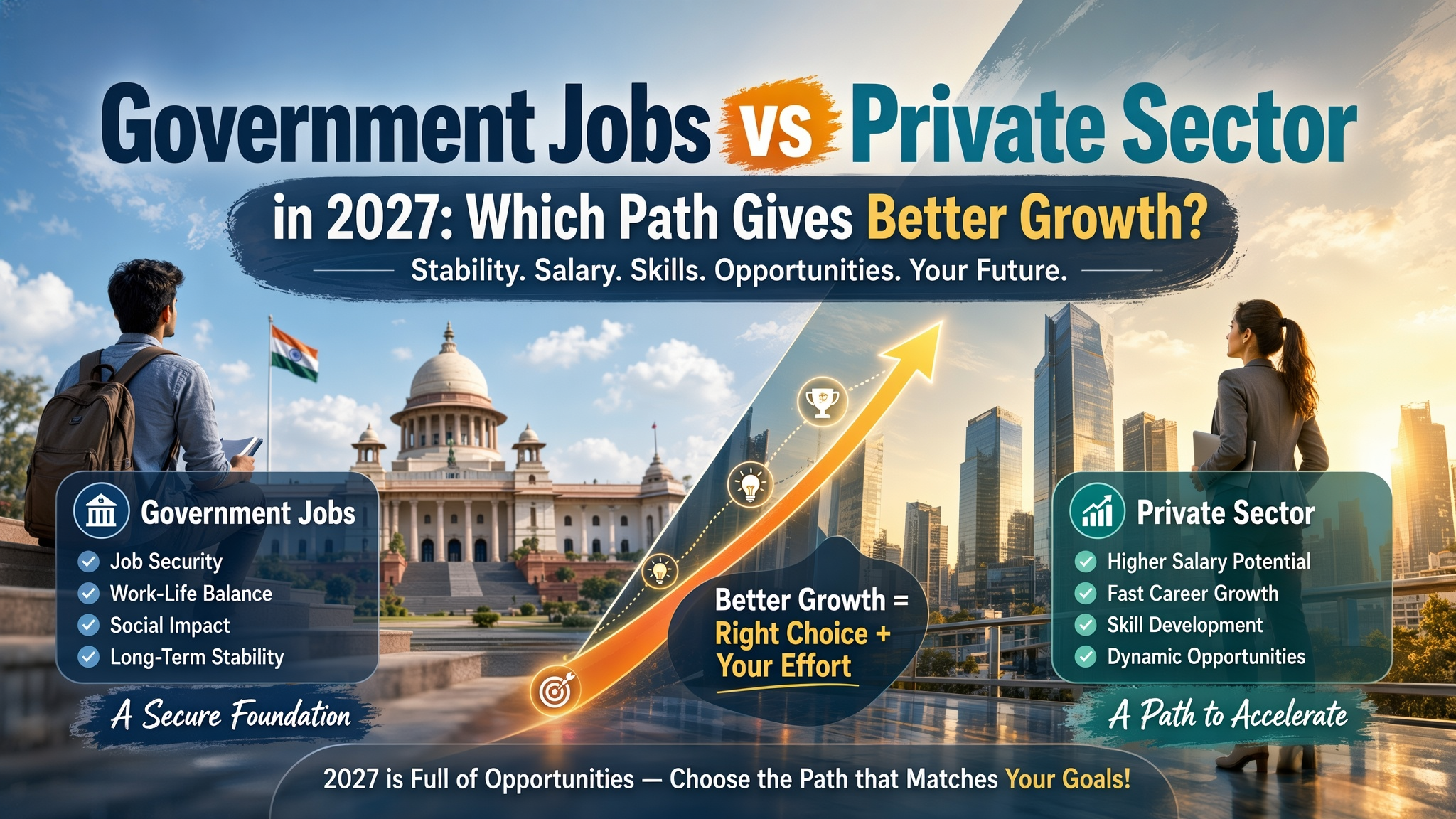
Government Jobs vs Private Sector in 2027: Which Path Gives Better Growth?
Government Jobs vs Private Sector in 2027: Which Path Gives Better Growth?
The better path is not the one everyone praises. It is the one that fits your priorities.
Both paths can lead to meaningful growth, and each rewards different strengths. This guide explains how to define growth for yourself, test your fit with evidence and keep your options open, and how requirehire.com helps you build a skill-scored profile while you decide.
A note before you read
This guide is published by RequireHire's content team for students, freshers, career switchers and working professionals who are weighing a government career against a private-sector one. Last updated November 2026. To be clear about scope, requirehire.com is India's interview-first hiring platform with structured AI interviews, skill scores, mock interviews, aptitude practice and a resume check.
Why Is Choosing Between a Government and a Private-Sector Career So Difficult?
Few career decisions come wrapped in as many opinions. Parents, relatives, teachers, friends and social media all have a view, and most speak from their own experience, which may be decades old or limited to one organisation. The result is advice that is sincere but rarely tailored to you.
The question itself is also framed too narrowly. "Which is better?" assumes that one answer fits everyone. In practice, a path that suits a person who values predictability and public service may feel wrong to someone who wants fast variety, and the reverse is equally true. Neither person is mistaken. They want different things.
A more useful question is: which path is better for me, given what I value, what I am good at and what my life needs right now? That question can be answered with evidence, and it can be revisited as you grow.
The gap this creates
Many people choose by pressure, habit or fear of regret. Closing that gap means defining growth in your own terms, gathering real information and measuring your strengths before you commit.
The Short Answer: The Better Path Is the One That Matches Your Definition of Growth
Neither government nor private-sector work is better for everyone. Define what growth means to you, test your fit with evidence and keep your options open.
A structured AI interview scores technical ability, communication and problem-solving, so you can compare paths using facts about your own strengths.
The rest of this guide shows how to decide step by step, and where requirehire.com fits in.
What Is Actually Making This Decision So Stressful?
Too many voices, too little fit
Advice often reflects the adviser's own life. It may be well meant yet poorly matched to your strengths and goals.
Unclear meaning of growth
Growth can mean pay, learning, status, security, flexibility or impact. Without choosing your own meaning, comparisons go in circles.
No evidence about your own strengths
Many people decide before they have measured how they reason, communicate and solve problems under mild pressure.
Fear of regret
The worry of choosing wrongly can freeze decisions and stretch a few months of uncertainty into years.
Debate this
Is career growth mainly about security, income, learning or purpose? Would your answer change at 22, at 30 and at 40?
Fix 1: How Do You Define What Growth Means for You?
Start on paper, not on a job portal. Write down the words that matter to you when you imagine a good working life five years from now. Typical entries include stability, steady learning, pay progression, flexibility, recognition, location, work-life balance and a sense of contribution.
Now rank your top five. The order matters more than the list. Someone who ranks stability first and someone who ranks learning speed first will read the same facts differently, and both readings are valid. Add one more line: what would make me say, in five years, that this was a good decision?
Finally, gather real information. Read official notifications for any government role you are considering, since eligibility, stages and timelines are published there. For private-sector roles, read job descriptions closely and speak with two or three people who work in the field. Ask what a normal week looks like and how people progress.
Try this week
Write your ranked list of five growth priorities, then speak to one person from each sector and note what matches and what does not.
Fix 2 and 3: Can Evidence and Open Options Replace Guesswork?
Next, replace opinion with evidence about yourself. On requirehire.com, you can warm up with mock interviews and aptitude practice, then take a structured AI interview that evaluates technical ability, communication and problem-solving and produces a skill score. It is a starting point, not a verdict, and it shows where you are strong and what to practise.
Evidence about your reasoning and communication is useful on either path. Clear thinking and clear speaking help in structured selection stages and in workplace interviews alike. Use your results to decide where to invest your preparation time.
Then keep your options open. A current resume and a skill-scored profile cost little to maintain, and they mean that a change of plan does not leave you starting from nothing. Employers browsing the ranked pool see an anonymised profile, and your contact details are shared only if you approve a request.
The combined effect
A personal definition of growth, a measured view of your strengths and a profile that keeps doors open. Together they turn a stressful either-or into a calm, reversible plan.
Your First AI Interview Takes Minutes. The Clarity Lasts Much Longer.
Register on requirehire.com, upload your resume and take a structured AI interview to see your baseline skill score today.
to register, and it takes just a few minutes to start.
Take My First AI InterviewPredictability vs Pace of Change: Which Do You Value More?
Predictability
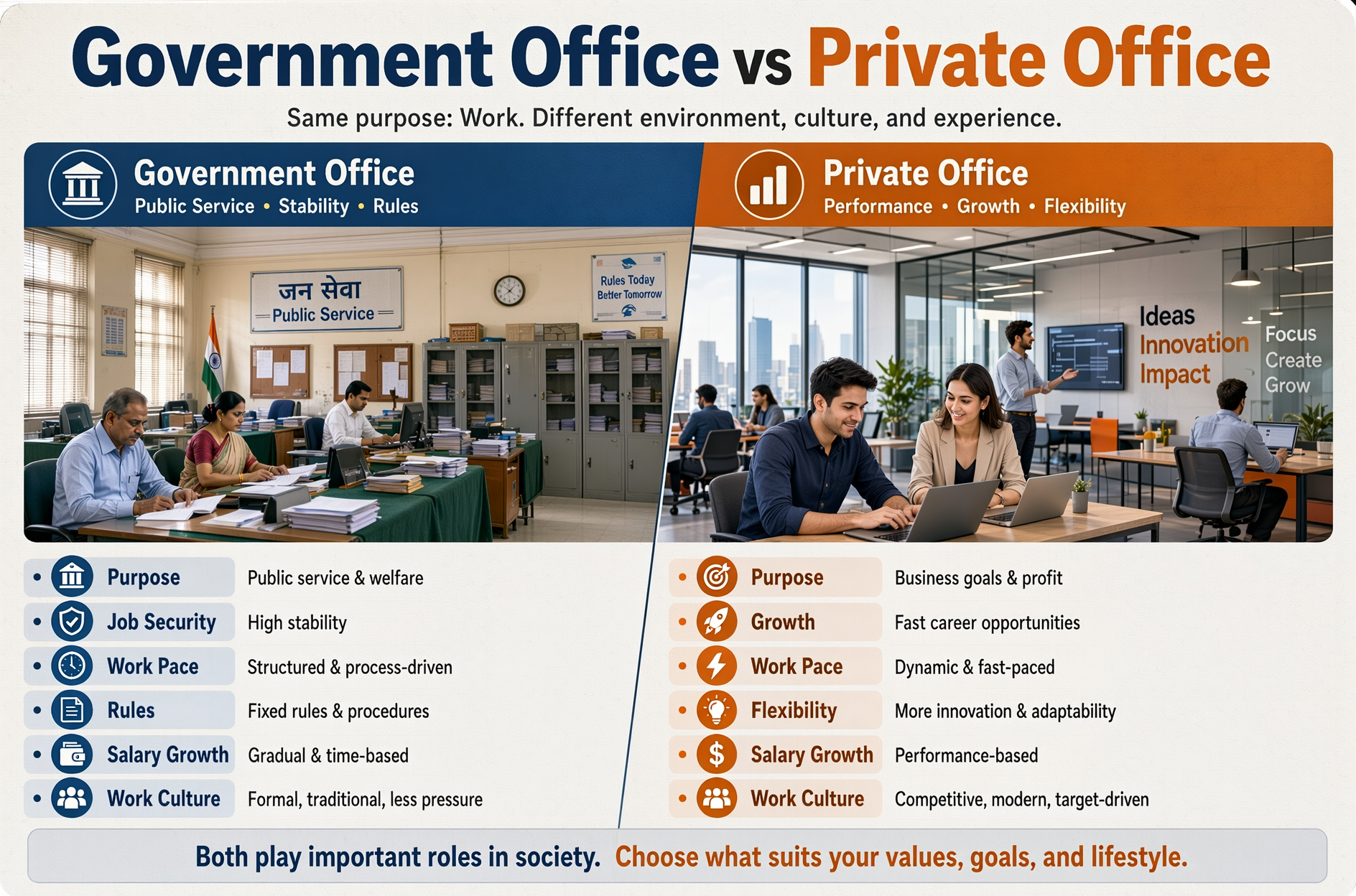
Many people value clearly defined roles, structured progression and a settled routine. For them, steadiness is itself a form of growth, because it allows long-term planning.
Pace of change
Others value rapid learning, varied projects and the chance to change roles often. For them, a faster-moving environment feels like growth.
The honest verdict
Neither preference is better. Each suits a different temperament and stage of life. Which describes you today, and would it still describe you in five years?
Exam-Style Selection vs Interview-Style Selection: Which Suits Your Strengths?
Exam-style selection
Often built around written stages, wide syllabi and sustained preparation. It rewards discipline, consistency and breadth of knowledge.
Interview-style selection
Often built around conversations, practical questions and demonstrated skills. A structured AI interview scores technical ability, communication and problem-solving on the same criteria for everyone.
The honest verdict
Different selection styles reward different strengths. Knowing whether you shine in sustained study or in live explanation helps you decide where to place your effort.
Stop Guessing Where You Fit. See Your Strengths Scored.
A structured AI interview evaluates technical ability, communication and problem-solving, so you know what to practise next on any path.
See How Scoring Works
Choosing Once and for All vs Keeping Options Open
Choosing once and for all
Gives focus and removes distraction, which can be a real advantage. The risk is that a change in circumstances leaves you without a prepared alternative.
Keeping options open
A light, steady habit of practice and a current profile. On requirehire.com, interviews are self-paced, so there is nothing to book.
The honest verdict
Commitment and flexibility can coexist. Give your main goal your best hours, and spend a few minutes a week keeping your alternatives alive.
Hidden Skills vs a Discoverable Profile
Hidden skills
You may be well prepared, but employers never see it. Your effort stays private, and opportunities depend on where you happen to apply.
A discoverable profile
A skill-scored profile that employers browsing a ranked pool can find, with contact details shared only after you approve.
The honest verdict
A visible, consent-first profile does double duty: it measures your readiness and lets private-sector opportunities find you while you focus on your plan.
Four Questions to Judge Any Career Path Fairly
Does it match my top three growth priorities, not someone else's?
Does it reward the strengths I can actually show, such as study discipline or live problem-solving?
Have I checked official or first-hand information instead of relying on rumour?
Is there a sensible way back or sideways if my situation changes?
What RequireHire Gives You to Work With
Structured AI interview scoring: your answers are evaluated for technical ability, communication and problem-solving, so you can see exactly where to improve.
Mock interviews and aptitude practice: rehearse interview questions and test your reasoning, without a separate cost.
One-time profile and resume check: build your profile from a single resume upload, then use the resume check to present your education, skills and achievements clearly.
A visible, skill-scored profile: employers browsing a ranked pool can discover you, which gives you a second door to open while you decide.
Consent-based privacy: employers see an anonymised profile, and your contact details are shared only after you approve.
Prepare Today. Keep Every Door Open Tomorrow.
Employers browse ranked candidate pools on requirehire.com. Your skill-scored profile can be there, with contact details shared only after you approve.
Register on RequireHire
Which Mistakes Do Candidates Make When Choosing a Path?
Following the crowd
A popular choice is not always your choice. Check it against your own ranked priorities before you commit.
Relying on outdated information
Rules, pay structures and hiring methods change. Read official notifications and current job descriptions.
Never measuring your skills
Preparing for months without knowing your strengths wastes effort. Take a baseline early and adjust.
Treating a score as a verdict
A score is a starting point, not a judgement of you. Use it to choose what to practise next, and ignore anyone who promises guaranteed jobs.
The "Choose One Path and You Can Never Change" Myth
It is a common belief: whichever door you enter first becomes your permanent corridor. The feeling is understandable, because early choices carry weight and the stakes seem high.
What this misses
Careers are rarely one straight line. Skills such as clear communication, sound reasoning and steady problem-solving travel with you, and people do change direction as their priorities change. Some moves take planning and have rules of their own, so check them carefully. The practical lesson is to keep building portable skills and a current profile, so that every choice stays adjustable. Hiring and selection decisions always belong to the organisations that make them.
What Actually Changes When You Decide With Evidence?
The shift, in plain terms
Before: advice from many directions, fear of regret and no measure of your own strengths. After: a personal definition of growth, a baseline skill score, a focused practice habit and a profile that keeps options alive. None of this promises a job. It gives you a calmer, more confident way to choose, and the freedom to adjust later.
What Does a Well-Made Career Decision Look Like?
A written definition of growth, with your top five priorities in order.
First-hand and official information, from notifications and people who do the work.
A baseline skill score, so you know your starting point and your next focus.
A current resume and profile, so a change of plan never starts from zero.
Your Starting Point, by Situation
Final-year student
Write your growth priorities early, take a baseline AI interview and practise weekly so that whichever path you choose, you start prepared.
Fresher deciding on a first job
Use mock interviews to find your weak spots, compare roles on your own priorities and retest to see improvement.
Career switcher
Practise explaining your transferable skills clearly, and use aptitude practice to build confidence in the new field.
Experienced professional
Review what growth means to you now, keep a scored profile visible and stay informed about options in both sectors.
Your Career Path Readiness Score
Tick everything that is true for you right now, then calculate your score.

This Guide, in Numbers
Your Decision Deserves a Clearer Starting Point
Register once on requirehire.com to see how AI interviews and skill scoring work for your own profile.
Turning This Into a Plan: Before, During, After
Do: Define growth and take a baseline interview
Your priorities and a starting score show what to compare.
Don't: Decide only on someone else's opinion
Advice is useful input, but the fit is yours to judge.
Do: Practise aloud and track your scores
Spoken practice builds clarity that helps on any path.
Don't: Neglect your fallback entirely
A light weekly habit keeps your alternatives alive.
Do: Review your choice every year
Priorities change, and a yearly check keeps your path aligned.
Don't: Stop learning once you are settled
Skills fade without use, so keep growing wherever you are.
Your Final Checklist
You have a written, ranked definition of what growth means to you.
You have checked official notifications and spoken to people in both sectors.
You have a baseline skill score and know your strongest and weakest areas.
Your resume and profile are current, so options stay open.
You know exactly how your contact details are shared with employers.
10 Questions Candidates Actually Ask About Government vs Private Careers

Good Careers Are Rarely Chosen by Luck. They Are Built by Clarity.
You now have a plan: define growth for yourself, gather real information, measure your strengths and keep your options open. Register on requirehire.com, take your first AI interview and make your next career decision with more confidence. It takes only a few minutes to begin.
100% for job seekers, always.
Ready to Practice What You Learned?
Take a free AI mock interview and get your skill score in 15 minutes. 100% free for all candidates.
Related Posts
Practice Your Interview
Get ready for your next interview with our AI-powered mock interview tool.
Start Practice Interview