Stop Wasting Time on Unqualified Applicants: The 2026 Hiring Fix That Actually Works
Stop Wasting Time on Unqualified Applicants: The 2026 Hiring Fix That Actually Works
One-click applying made it effortless to apply to a role you're not remotely qualified for. Your process is still built for a world where that friction existed.
Unqualified applicants aren't just annoying — they cost real hours, bury genuinely strong candidates deeper in the pile, and slow down every hire behind them. This guide breaks down exactly why it's getting worse, what it actually costs you, and a real fix at both the job posting level and the screening level.
A note before you read
This guide is published by RequireHire's content team, part of Veridant AI. It's written for anyone who's opened an applicant list and immediately recognised how many of them don't remotely match what was posted — a founder, an HR generalist, a hiring manager juggling recruitment alongside everything else. The fixes here start with your job posting, not just your screening process.
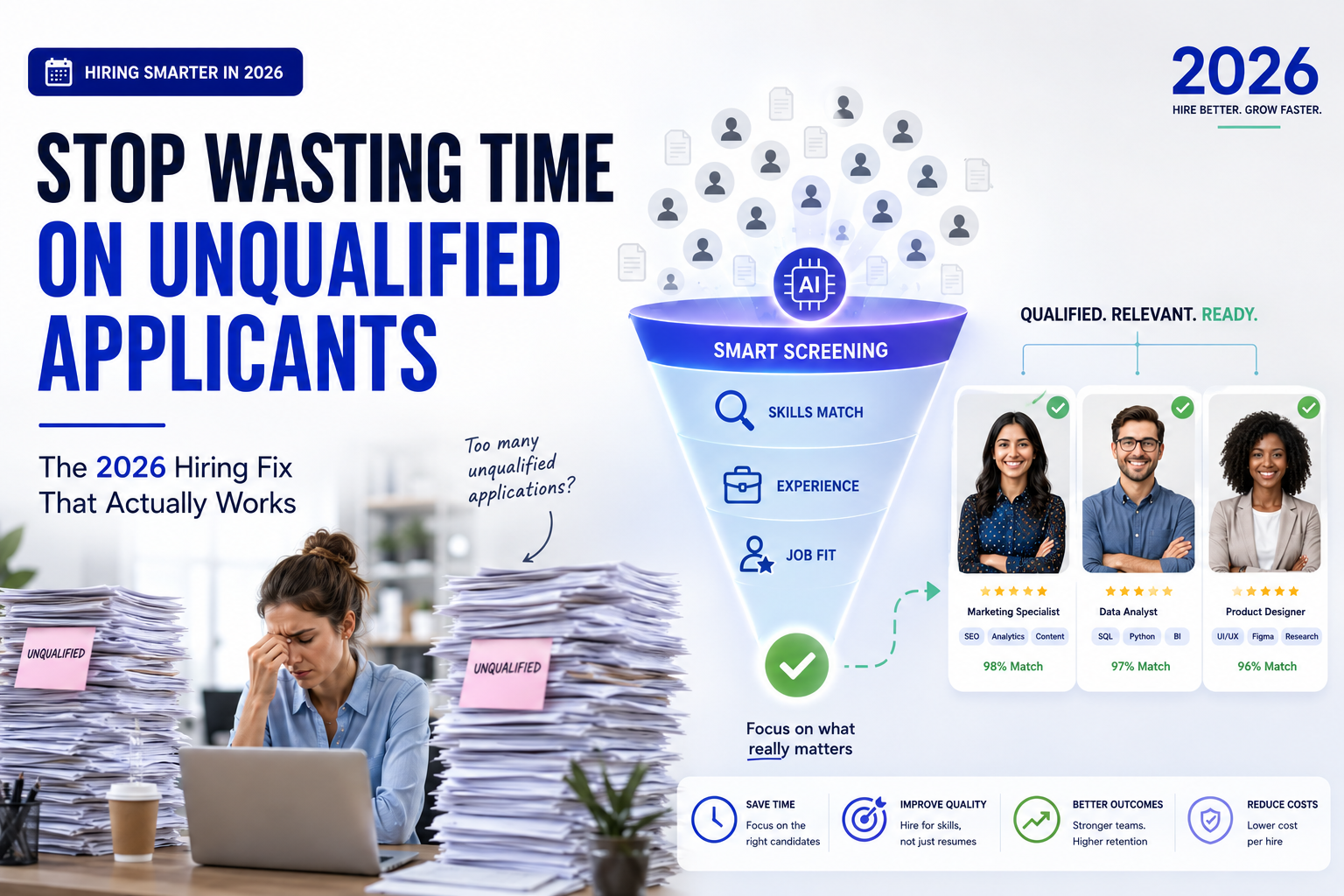
Why This Problem Is Getting Worse, Not Better
One-click "easy apply" features and the sheer number of job boards someone can post the same generic application to have made spray-and-pray applying easier than it's ever been. A candidate can apply to dozens of loosely-related postings in an evening with almost no added effort per application — which means the postings themselves increasingly attract volume that has little to do with actual fit.
What this means for your process
A hiring process built for a world where applying took real effort — writing a note, tailoring a resume — is fighting an uphill battle against a world where applying takes one click. Fixing this isn't about screening harder after the fact; it's about changing what happens before someone applies at all.
Fix Two Things: the Posting, and the Screening
Reducing unqualified applicants isn't about manually filtering harder — it's about fixing what happens before and immediately after someone clicks apply.
A posting that states its real requirements clearly filters people out before they apply. A structured screening step filters out the rest before a human ever needs to review anything.
The rest of this guide breaks both of those down into specific, practical fixes.

What Unqualified Applicants Actually Cost You
Screening fatigue that hurts good candidates too
Sorting through a flood of mismatched applications tires out a reviewer well before they reach the genuinely qualified ones buried in the pile.
Qualified candidates get crowded out
A strong application can get less attention simply because it arrived in the middle of dozens of clearly mismatched ones.
Hours that don't come back
Every minute spent on an applicant who was never going to be a fit is a minute not spent moving a real candidate forward.
A slower process for everyone
The more noise in the pipeline, the longer it takes to get from posting to shortlist — and strong candidates don't wait around while you sort through it.
Why Unqualified Applicants Apply in the First Place
Vague job titles. "Executive" or "Associate" can describe wildly different roles across companies, so candidates apply based on the title alone, without knowing what the role actually involves.
Requirements buried or unclear. If the must-haves aren't stated plainly near the top of the posting, candidates skim past them and apply anyway.
One-click applying removed natural friction. Writing even a short cover note used to filter out casual applicants on its own — a single button doesn't ask for anything.
Overly broad postings casting too wide a net. "Any graduate welcome" style postings, meant to be inclusive, often also invite candidates with no real interest or fit in the specific role.
No visible pre-screening step. If there's no early filter — a quick question, a short assessment — the posting silently signals that anyone can apply and get equal consideration.
Desperation-driven applying. In a competitive job market, some candidates apply broadly regardless of fit simply because applying costs them almost nothing.

How to Write a Job Posting That Filters Itself
Put your 2-3 genuine must-haves in the first few lines, not buried at the bottom where most applicants never read.
Use a specific, accurate title rather than an inflated or vague one that could describe several different roles.
Include one specific detail about the actual day-to-day work — it naturally discourages someone who wouldn't want that work anyway.
State the experience level plainly and specifically — "0-1 years, fresher welcome" filters more accurately than a vague "junior to mid-level."
Add a short screening question at the point of application. Even one thoughtful question filters out a real share of pure spray-and-pray applicants.
The Best Filter Happens Before an Application Ever Reaches You
A clear posting is the first filter. Structured screening is the second — when candidates register on RequireHire, they're evaluated through AI interviews and skill-based scoring before their profile ever lands in your inbox.
This is the exact link your applicants would use to enter that process.
See the Registration FlowHow to Stop Unqualified Applicants Before They Reach You
Even a well-written posting won't filter out everyone — some people apply to almost anything regardless of how clearly it's written. The next layer is structured screening: routing every applicant through the same consistent evaluation before a human ever opens their profile.
What this changes in practice
Instead of a raw applicant list where every profile gets equal manual attention regardless of fit, a structured pre-screening step means what reaches your inbox has already cleared a real bar — actual reasoning and communication, evaluated consistently, not just a single click on an "apply" button.
Broad, Generic Postings vs Specific, Self-Filtering Postings
Broad postings
Feel inclusive and attract higher raw volume, but that volume includes a large share of people who were never a genuine fit for the role.
Specific postings
Attract fewer total applicants, but a meaningfully higher proportion of them are actually qualified and genuinely interested.
The honest verdict
Fewer, better-matched applicants beat a larger pile that needs manual sorting every single time — volume was never actually the goal, a good hire was.
Manual First-Pass Review vs Structured Pre-Screening
Manual review
Every application gets looked at regardless of fit, which is exactly what makes unqualified applicants costly in the first place.
Structured pre-screening
Every applicant is evaluated the same consistent way before a human reviews anything, so clearly mismatched applicants get filtered out automatically.
The honest verdict
Structured screening addresses the problem at its actual source, rather than asking a human to power through an unfiltered pile faster.
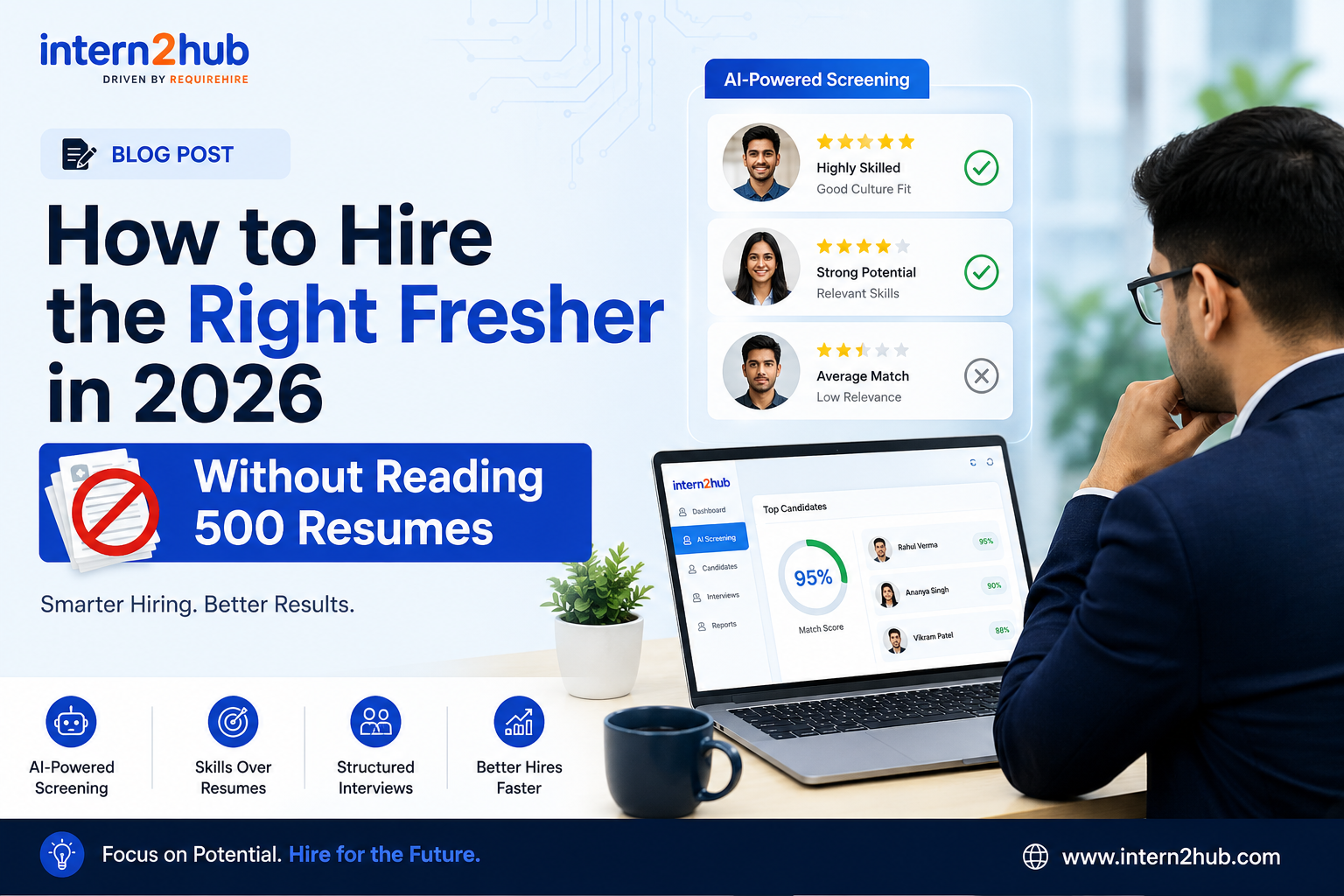
Stop Sorting. Start Reviewing Only What's Actually Qualified.
Share this exact link with applicants — it's where they register their resume and enter structured AI interview screening automatically.
Get the Registration LinkOptimising for Application Volume vs Match Quality
Chasing volume
More total applicants can feel like more options, but past a point it mostly just means more noise to sort through with no added benefit.
Chasing match quality
Fewer applicants, but a much higher hit rate — which is what actually shortens time-to-hire, not raw applicant count.
The honest verdict
Volume without quality doesn't actually help fill a role faster — it just moves the bottleneck from "not enough applicants" to "too many to sort."
Reactive Filtering vs Proactive Filtering
Reactive filtering
Filtering happens after someone applies, meaning you've already paid the cost of their mismatched application landing in your pipeline.
Proactive filtering
Filtering happens through the posting itself and a pre-screening step, before an unqualified application ever fully lands in your queue.
The honest verdict
Fixing this earlier in the pipeline is cheaper every single time than fixing it later — the two fixes in this guide both work by moving the filter upstream.
A Simple Framework to Audit Your Current Posting
Are the 2-3 genuine must-haves stated in the first few lines?
Would someone reading only the title accurately guess what the role actually involves?
Is there any screening step before a human manually reviews every single application?
If today's applicant volume doubled tomorrow, would your current process still hold up?
Give Your Applicants One Link, Not an Email Inbox
By the time a candidate profile lands with you, they've already been through structured AI interview screening — that process starts here.
See How It StartsCommon Mistakes That Attract Unqualified Applicants
Writing an inflated title
Making a role sound more senior or attractive than it actually is invites applicants whose expectations don't match reality from the very first click.
Listing every nice-to-have as required
An overloaded requirements list paradoxically makes candidates ignore it entirely, since it no longer reads as a genuine filter.
Posting everywhere without matching the audience
Blasting the same posting to every board indiscriminately trades relevance for reach, and usually loses more than it gains.
Having no screening step at all
Without any early filter, every applicant reaches manual review with equal weight, regardless of how clearly mismatched they are.

The "More Applicants = Better Odds" Myth
A flood of applications feels like more options and, intuitively, more chances the ideal candidate is somewhere in there. Past a certain point, though, that volume mostly just dilutes the pool with mismatched candidates and buries the genuinely qualified ones deeper.
What actually improves your odds
It's not the raw size of the applicant pool that determines hire quality — it's the quality of the filtering applied to it, both at the posting stage and the screening stage. A smaller, better-filtered pool reliably outperforms a huge, unfiltered one.
What Actually Changes When You Fix This
The shift, in plain terms
Before: a posting that draws a wide, unfiltered pool, hours spent manually sorting through applicants who were never a fit, and a genuinely strong candidate at real risk of getting missed in the noise. After: a posting that filters itself, a screening step that catches the rest, and a shortlist you can actually give your full attention to. Nothing about the market changed — only how efficiently the right candidates surface.
What a Qualified-Applicant-Only Pipeline Looks Like
A posting with clear, upfront requirements that an applicant can honestly self-assess against before applying.
A quick screening step before human review, so mismatched applications never reach an inbox in their raw form.
Structured evaluation applied consistently to whoever does apply, regardless of when or in what order.
A shortlist that's actually worth full attention, since it's already been narrowed by real, consistent criteria.

Your Starting Point, by Situation
About to post a new role
Run the four-question audit before you publish — it takes minutes and shapes who applies from the very first day.
Currently drowning in an existing pile
Add a screening step now, even mid-drive — it won't fix already-received applications, but it stops the flood from getting worse.
Hiring freshers at real volume
Both fixes matter more here than almost anywhere else — entry-level postings draw the widest, least self-filtered applicant pools by default.
Building a repeatable process
Turn the posting checklist and screening step into a standard template you reuse for every role, not a one-off fix.
Your Hiring Filter Score
Check everything that's true of your current process, then calculate your score.
This Guide, in Numbers
Your Shortlist Should Already Be Qualified
See exactly how candidates enter the screening process, starting with resume registration.
See the Registration Flow
Turning This Into a Plan: Before, During, After
Do: Run the four-question audit
A few minutes of review before publishing shapes who applies from day one, far more cheaply than filtering afterward.
Don't: Reuse an old posting without checking it
A template that worked for a different role may quietly be attracting the wrong applicants for this one.
Do: Route applicants through a consistent screening step
The same evaluation applied to everyone, every time, is what actually keeps the filter fair and reliable.
Don't: Manually eyeball a growing pile "for now"
A temporary manual workaround tends to become the permanent process — fix the pipeline instead of powering through it.
Do: Spend your real time on the shortlist
This is where careful human judgement genuinely adds value — not spread thin across an unfiltered pile.
Don't: Assume the fix is permanent without checking
Revisit the posting and screening step periodically — what worked for one hiring drive may need adjusting for the next.
Your Final Checklist
Your posting's must-haves are in the first few lines, not buried.
Your title accurately reflects the actual role.
A screening step exists before manual review.
Your criteria are applied consistently to every applicant.
You've tested whether this process holds up at higher volume.
10 Questions Hiring Managers Actually Ask About This

While You're Sorting Through Unqualified Resumes, a Qualified Candidate Is Accepting Someone Else's Offer
You now know exactly why unqualified applicants keep flooding your postings, and how to fix it at both the posting level and the screening level. The next step is simple: get your applicants into a structured process instead of an inbox. This is the exact link candidates use to register their resume and start AI interview screening.
RequireHire is a product of Veridant AI.
Ready to Practice What You Learned?
Take a free AI mock interview and get your skill score in 15 minutes. 100% free for all candidates.
Related Posts
Practice Your Interview
Get ready for your next interview with our AI-powered mock interview tool.
Start Practice Interview