How RequireHire Helps You Prepare for Government Jobs
How RequireHire Helps You Prepare for Government Jobs
Exams test what you know. Interviews, and the jobs that follow them, test how you think and communicate. Here is how RequireHire helps you prepare for both.
Preparing for a government job in 2026 takes more than finishing the syllabus. This guide explains where a study-only routine leaves gaps in feedback, skills and continuity, and how RequireHire's interview practice, skill scoring, aptitude practice and resume tools help you close them while you build professional skills that last beyond any single exam.
A note before you read
This guide is published by RequireHire's content team for anyone preparing for a government job: a final-year student getting started, a graduate several attempts in, or a working professional studying after office hours. To be clear about scope, RequireHire is the part of preparation that most study plans leave out: practising interviews, building communication and reasoning skills, and keeping a professional profile ready.
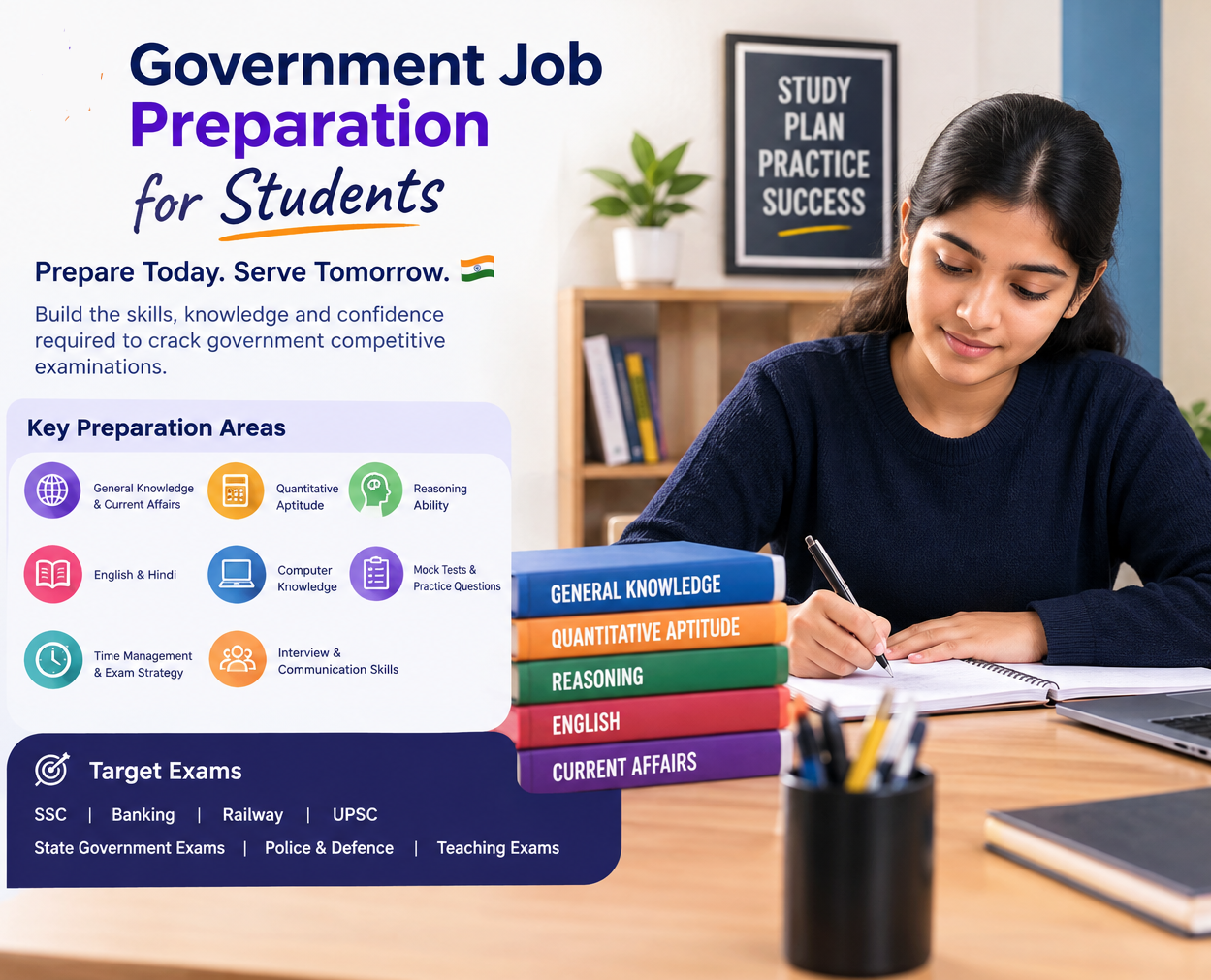
Why Government Job Preparation Needs More Than a Syllabus in 2026
Serious aspirants tend to prepare in the same way: read the syllabus, solve papers, revise, repeat. That routine works well for what it measures. Test series and study material show how much you remember and how quickly you can answer. They reveal very little about how you sound when a panel questions you, how clearly you explain your thinking, or how you carry yourself in a personal round.
That matters because many recruitment processes, including civil services, officer-level banking posts, several state commission exams, defence selection and a good share of PSU hiring, include an interview or personality test. It also matters because the roles themselves are people-facing. A government job asks you to write clearly, decide carefully and deal with the public. Recruitment calendars add another layer of strain: notifications slip, dates move and results take time, so long stretches pass without any visible sign of progress.
The gap this creates
Many aspirants know their subjects well yet have no dependable way to see their communication, reasoning and professional readiness. Closing that gap doesn't mean studying harder in the same way. It means adding practice and feedback in the areas your current routine can't measure.
Close Three Gaps, Not Just More Chapters
Preparing well for a government job means closing three gaps: feedback, skills and continuity.
That means honest feedback on how you perform beyond written tests, the everyday professional skills the job will demand, and a profile that keeps working when the recruitment cycle runs long.
The rest of this guide shows, in practical terms, how RequireHire helps with each one.
What Every Government Job Aspirant Is Actually Up Against
Preparing without honest feedback
Whether you study alone or in a classroom, you rarely get objective feedback on how you speak, reason aloud or handle pressure. Many aspirants only discover their weak spots on the day of the interview.
The personal round gets the least preparation
Most hours go to written papers, which is understandable, yet many processes also include an interview or personality test. Communication skills take weeks of steady practice to change and can't be built overnight.
Long, unpredictable timelines
Notifications, exam dates and results don't always follow a fixed schedule. Months can pass with little visible progress, which weighs on motivation, confidence and finances.
A preparation gap that's hard to explain
If you later apply for a different role, a long stretch of full-time preparation can read as a blank on paper, unless you can point to skills you built during it.
Fix 1: Interview Practice That Shows How You Actually Perform
RequireHire lets you take a structured AI interview whenever you're ready. There's no slot to book and no panel to arrange. The interview evaluates how you answer, looking at technical ability, communication and problem-solving. It isn't modelled on any single board's format, and it doesn't need to be. The underlying skills are the same in every personal round: organising a thought before you speak, answering the question that was actually asked, and staying composed when a question surprises you.
You can warm up with the mock interview tools first, then take the scored interview when you feel prepared. Each stage gives you something a written test can't: a view of your own answers from the outside.
Why this closes the feedback gap
Instead of guessing how you come across, you get evidence: a skill score attached to your profile and a clear checkpoint to measure later practice against. You can spend your next sessions on the weak spot rather than rehearsing what you already do well.
Fix 2 and 3: A Skill Score You Can Measure Against and a Profile That Keeps Working
The skill score turns "I think I'm improving" into something specific. It reflects technical ability, communication and problem-solving, the same abilities a government role leans on every day, whether that means drafting a clear note, explaining a decision or handling a difficult query. Around it sit the practical tools: aptitude practice in the style of real hiring tests, which shows where your reasoning and speed need work, and a resume check that helps you present your education, skills and achievements clearly.
Your profile then does a second job. Once you've registered and completed your interview, employers browsing the ranked candidate pool can see an anonymized version of it, and your contact details are shared only when you approve. That gives you a professional footing outside the exam cycle, which is useful if you choose to take a job while preparing or if a timeline stretches longer than you planned.
The combined effect
Rather than feeling prepared only when a test series says so, you hold three kinds of evidence: how you perform in an interview, a score to measure your progress against, and a live profile that keeps your options open.
Your Government Job Preparation Deserves More Than One More Mock Test
Register once, complete a short AI interview and get a clear read on your communication and reasoning before the official interview does.
For every government job aspirant. Free to register, and it takes just a few minutes to start.
Start Your AI InterviewScattered Preparation vs One Structured Profile
Scattered preparation
Notes in one place, mock scores in another, interview practice whenever a friend has time, and a resume that only gets updated when someone asks for it.
One structured profile
A single profile built from your resume, a skill score from a structured interview, and your practice tools kept in the same place.
The honest verdict
Scattered preparation isn't a failing. Most aspirants assemble it out of necessity. The trouble is that it makes progress hard to measure. Keeping the non-written parts of your preparation in one place lets you see what has improved and what still needs work.
Mock-Test Marks vs an Actual Skill Score
Mock-test marks
A number showing how many questions you got right in a written format. Useful for knowledge and speed, silent on how you explain, argue or respond out loud.
An actual skill score
A score from a structured interview that reflects technical ability, communication and problem-solving, and gives you something specific to work on.
The honest verdict
Both matter. Written mocks tell you whether you know the material; an interview score tells you whether you can put it across. Government selection, and the work that follows it, asks for both.
Marks Show What You Know. A Skill Score Shows How You Perform.
A short AI interview gives you something concrete to work on, not just another percentage from a test series.
See How Scoring Works
Waiting for Results vs Staying Professionally Visible
Waiting for results
Putting everything else on hold until notifications, exam dates and results arrive, with nothing to show what you can do in the meantime.
Staying visible
A ranked, skill-scored profile that employers browsing the platform can discover, so opportunities can find you even while your main focus is an exam.
The honest verdict
Nobody should give up a government goal because a notification is late. This is about making sure a long wait doesn't leave you empty-handed. Being discoverable takes very little time and keeps a second door open.
One Attempt at a Time vs Continuous Skill Building
One attempt at a time
Every effort is aimed at a single exam date, so if that attempt doesn't go your way, the momentum you built fades with it.
Continuous skill building
Regular interview practice, aptitude sessions and resume updates that add up over months and stay useful whatever the next result turns out to be.
The honest verdict
An exam date is a one-time event. Skills are not. Communication, reasoning and professional presentation carry over to your next attempt, to a private-sector role or to your first weeks in a government post.
A Simple Framework to Judge Any Preparation Tool
Does it show me how I perform, not only how much I know?
Does it build skills I'll use in the job itself, such as communication and problem-solving?
Can I use it whenever I have time, without booking sessions or depending on someone else's schedule?
Is it honest about its limits, with no guaranteed-selection promises, and does it leave me in control of who sees my contact details?
What RequireHire Gives You to Work With
Structured AI interview scoring: your answers are evaluated for technical ability, communication and problem-solving, so you can see where to improve.
Mock interviews and aptitude practice: rehearse interview questions and test your reasoning in the style of real hiring rounds, without a separate cost.
One-time profile and resume check: build your profile from a single resume upload, then use the resume check to present your education, skills and achievements clearly.
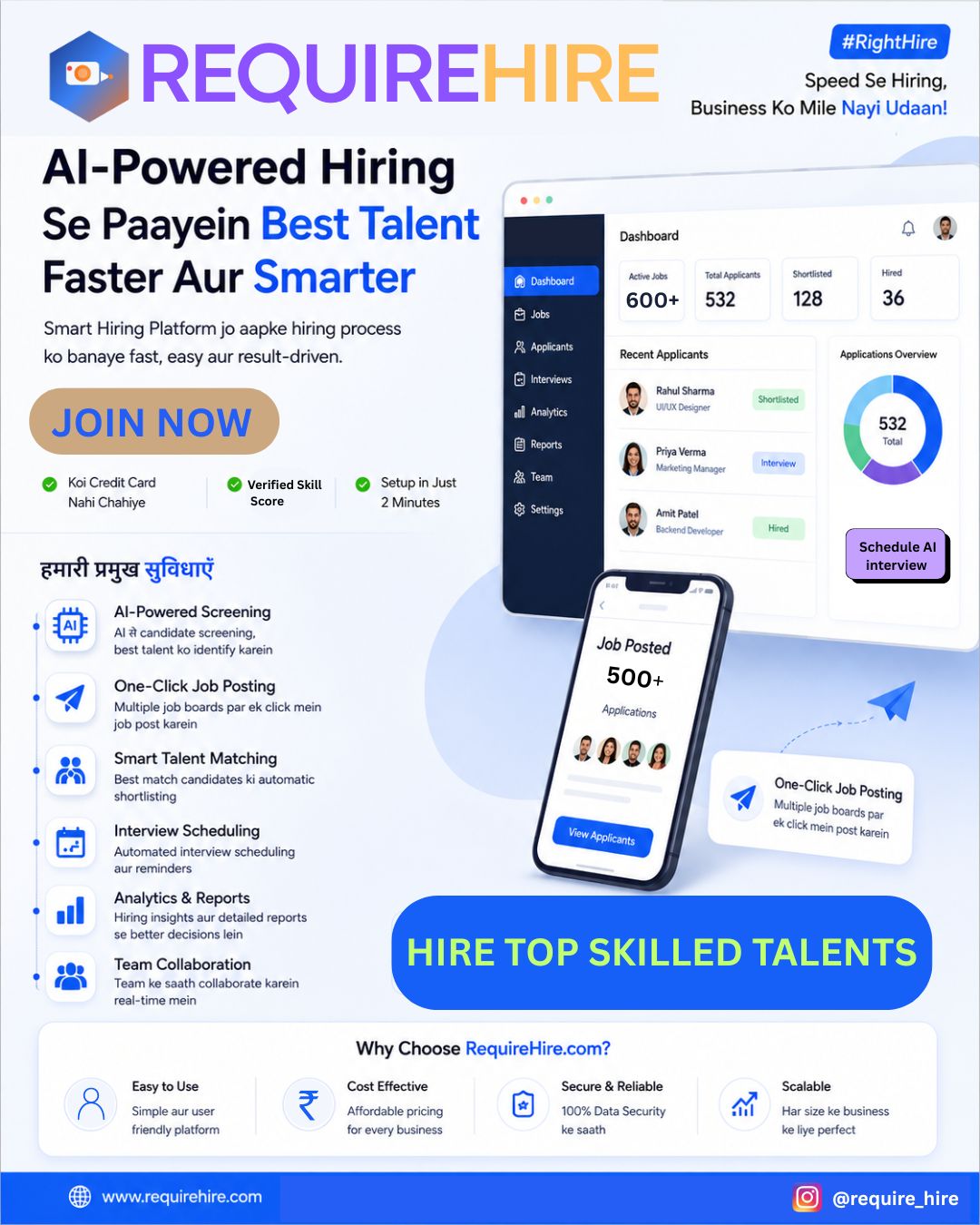
A visible, skill-scored profile: employers browsing a ranked pool can discover you, which gives you a second door to open while your main exam cycle runs.
Consent-based privacy: employers see an anonymized profile, and your contact details are shared only after you approve.
Every Week of Preparation Should Show You Where You Stand
Employers running hiring drives browse ranked candidate pools on the platform, and your profile can be there while you study.
Register on RequireHire
Common Mistakes Government Job Aspirants Make
Treating the interview as an afterthought
Waiting for written results before thinking about the personal round leaves little time to build communication skills, which change slowly and need weeks of steady practice.
Judging readiness only by mock-test marks
Marks track knowledge and speed. They say nothing about how well you explain your thinking, respond to follow-up questions or stay composed.
Pausing everything else while you wait
A long stretch with no visible skills, projects or profile makes your time harder to explain later and leaves you with fewer options if plans change.
Trusting anyone who promises a guaranteed government job
Genuine recruitment runs through official notifications and selection processes. Avoid anyone who asks for money in exchange for a seat or a sure post. RequireHire is free for job seekers and makes no such promises.
The "Just Study More Hours" Myth
It's the advice every aspirant hears: if the results aren't coming, add more hours. Sometimes that is exactly right. Often, though, more hours of the same routine only deepen what you already do well.
What this misses
If your routine measures only recall and speed, extra hours raise recall and speed and little else. The gap that costs candidates at the final stage is usually different: clarity of expression, structured thinking under questioning and composure. Those improve through practice with feedback, not through extra reading. Adding interview practice and a skill score to your week can be a better use of an hour than another revision of a chapter you already know well.
What Actually Changes When You Close These Gaps
The shift, in plain terms
Before: readiness judged only by written marks, interview practice left for later or done with no feedback, a resume that goes stale, and a long wait with nothing to show for it. After: a skill score you can measure yourself against, answers that come out clearer and calmer, a resume and profile that present your strengths accurately, and a live profile that keeps professional options open. None of this promises selection. What it gives you is a stronger candidate, with the communication and reasoning that help in the exam room, the interview room and the job itself.
What Good Government Job Preparation Looks Like
A study plan that covers both the syllabus and the personal round, with hours for spoken skills in your weekly schedule, not just written papers.
An actual skill score from a structured interview, so communication and reasoning are measured rather than assumed.
Regular aptitude and mock-interview practice in small, frequent sessions instead of a last-minute rush.
A current resume and profile that show what you've built, whatever the exam calendar does.
Your Starting Point, by Situation
Final-year student about to start preparing
Register early and take a first AI interview now, so a baseline skill score exists before serious preparation begins and you can see how far you've come later.
Full-time aspirant, one or more attempts in
Add weekly interview and aptitude practice to your routine, and update your resume with the skills you've built during preparation so the gap years show real work.
Working professional preparing alongside a job
Short sessions fit around your working day, with no scheduling needed, and your profile keeps showing your professional strengths while most of your time goes to the syllabus.
Preparing for months without knowing what's holding you back
This is where a skill score helps most. It gives you a specific view of your communication and reasoning that written mocks can't, so you know what to fix first.
Your Government Job Readiness Score
Tick everything that's true for you right now, then calculate your score.

This Guide, in Numbers
Your Preparation Deserves a Clearer Starting Point
Register once to see how AI interview practice and skill scoring work for your own profile.
Turning This Into a Plan: Before, During, After
Do: Register and take a baseline AI interview early
Knowing your starting level in communication and reasoning lets you plan your weeks around real gaps instead of guesses.
Don't: Wait until the written exam is cleared to think about the interview
Communication skills build slowly. Starting late leaves too little time to change how you speak and structure your answers.
Do: Add short, regular practice sessions to your weekly routine
Even a couple of interview or aptitude sessions each week keep your skills warm alongside your syllabus.
Don't: Let your resume and profile go stale while you study
A profile that's months out of date doesn't reflect what you've learned, and it can't help if you need it quickly.
Do: Keep building skills whatever the result
Selected or not, communication, reasoning and professional presentation stay useful in your next attempt, in another role or in your first days on the job.
Don't: Stop practising the moment a result arrives
A good result opens a new professional phase and a disappointing one needs a plan. Either way, staying in practice keeps you ready.
Your Final Checklist
You have one complete profile built from your resume and kept current in one place.
You have an actual skill score from a structured interview, so your communication and reasoning are measured.
You practise aptitude questions and mock interviews on a regular schedule, not only just before an exam date.
You know exactly how and when your contact details would be shared with an employer, and you confirm recruitment news only from official sources.
This routine is something you can keep running through your whole preparation, whichever exam or role comes next.
10 Questions Government Job Aspirants Actually Ask

The Aspirant Who Practises Early Walks Into the Interview Room Better Prepared
You now know where a syllabus-only routine falls short and how RequireHire helps close the gaps: interview practice, a measurable skill score, and a profile that keeps working while you prepare. The next step is simple. Register once, and start practising.
100% for job seekers, always.
Ready to Practice What You Learned?
Take a free AI mock interview and get your skill score in 15 minutes. 100% free for all candidates.
Related Posts
Practice Your Interview
Get ready for your next interview with our AI-powered mock interview tool.
Start Practice Interview