How to Become the Problem-Solving Intern Every Team Wants to Hire in 2026
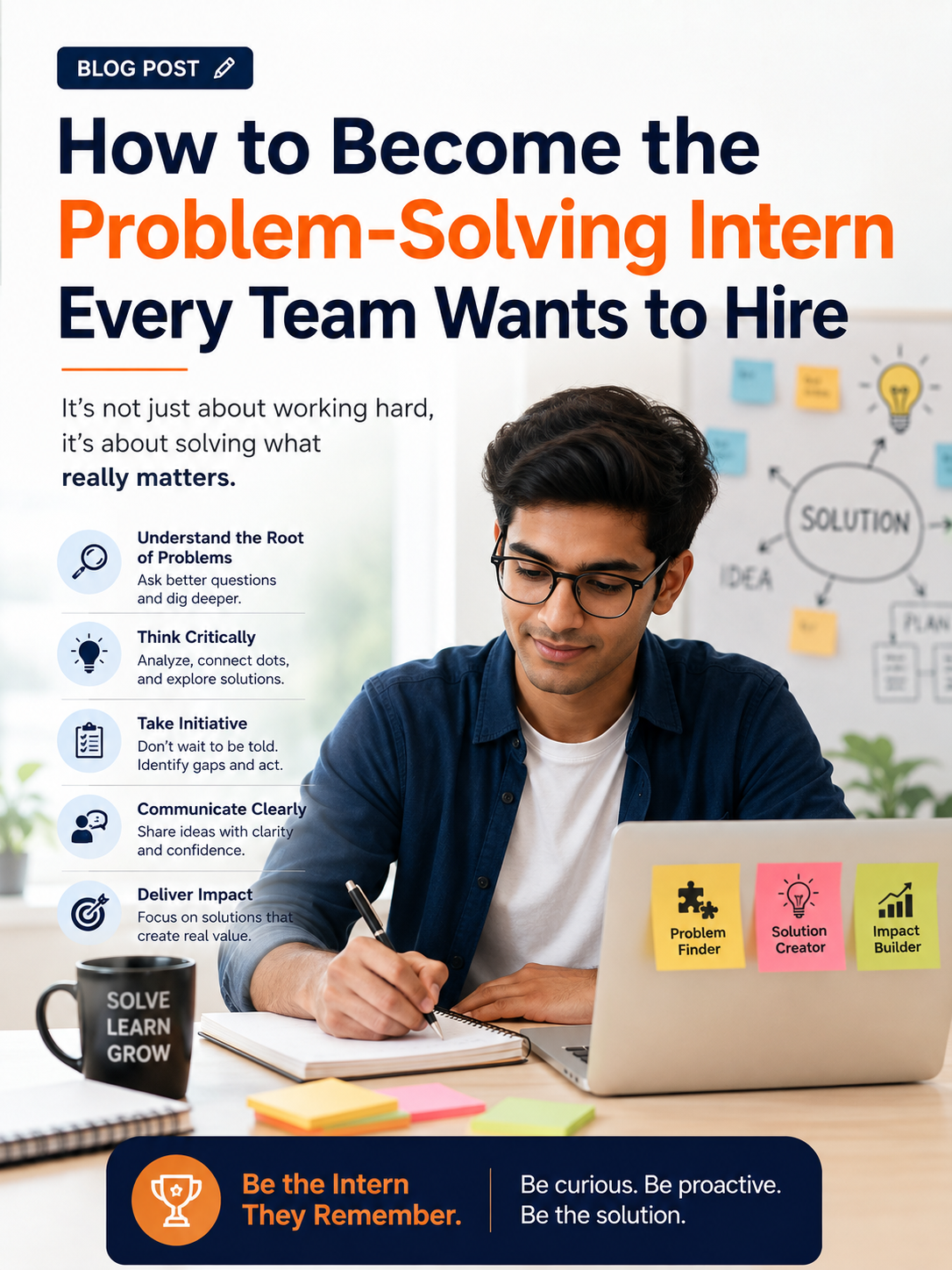
How to Become the Problem-Solving Intern Every Team Wants to Hire
Two interns get the same task. One waits to be told exactly what to do. The other brings back three options and a recommendation. Only one of them gets the offer.
Being a "problem-solving intern" isn't about being the smartest person in the room or already knowing every answer. It's a specific, learnable set of habits — and this guide breaks down exactly what they are, a simple framework to apply them, and how to turn all of it into resume-ready proof by the time your internship ends.
A note before you read
This guide is published by RequireHire's content team, part of Veridant AI. Everything here is written as a practical about skill . It's a set of habits anyone can build, in any field, starting with your very next task.
Why This Mindset Matters More Than Technical Skill
Most internships don't actually require deep technical mastery on day one — they require someone who can figure things out, communicate clearly, and follow through without constant supervision. Whoever's deciding whether to extend an offer at the end is watching for exactly this pattern far more closely than they're tracking how many tools you already knew coming in.
Why this is even more true in 2026
As teams increasingly use everyday tools and AI assistance to speed up routine execution, the real differentiator has shifted from "can you do the task" to "can you figure out the right task and see it through." That shift is exactly what this guide is about — and it's a mindset you can start building in your very first week.
It's a Habit, Not a Personality Trait
Becoming a problem-solving intern isn't about being the smartest person in the room — it's a specific, learnable set of habits.
Understand the real goal behind a task, bring options instead of just questions, follow through without being chased, and close the loop on everything you touch. None of it requires expertise you don't have yet.
The rest of this guide breaks all of it down into 10 specific habits, a simple framework, and how to document it for your resume.
What "Problem-Solving Intern" Actually Means
The phrase gets misread constantly — as needing to be naturally brilliant, or already knowing the answer before anyone asks. In practice, it's neither. It's about how you approach uncertainty: staying curious instead of stuck, proposing instead of only asking, and following through instead of letting things quietly drop.
Why this is genuinely good news
Because it's a set of habits rather than a fixed trait, it's learnable by anyone, in any field, starting from your very next task — regardless of how much technical background you walked in with.

The 10 Habits, Starting With the Foundations
Ask what problem you're actually solving, before starting. Understanding the underlying goal, not just the literal instruction, means you can catch early if the task itself needs adjusting.
Bring 2-3 options, not just a question. Instead of "what should I do here?" try "I see three ways to handle this — here's what I'd lean toward and why." Even if you're wrong, it shows you're thinking, not just waiting.
Notice what's not working, even outside your assigned task. A genuinely useful intern points out a small inefficiency or gap they noticed, even if nobody asked them to look for it.
Follow through without being chased. Problem-solving isn't just spotting an issue — it's making sure it actually gets resolved, including following up on your own open items.
Ask specific questions. "I'm not able to solve " gets a generic answer. "I've tried X and Y, and I'm unsure whether Z is the right next step" gets a useful one — and shows you've already done real thinking.
You've Built the Skill. Now Make Sure Employers Can See It.
Every one of these habits becomes real resume material once you document it. Register your resume on RequireHire and let it build your profile automatically, ready for employers who value exactly this kind of initiative.
For job seekers. Takes minutes, not hours.
Register Your ResumeThe Habits That Build a Lasting Reputation
Document what you tried, not just what worked. When you hit a dead end, writing down what you attempted, and why it didn't work, saves the next person — including future-you — from repeating it.
Treat a "no" as information, not a failure. A problem-solver adjusts and tries a different angle instead of getting discouraged or stopping at the first pushback.
Learn to disagree constructively. Saying "I see it differently, here's why," respectfully, when you genuinely think something's off, is far more valuable to a team than silent agreement with something you suspect is wrong.
Look one step ahead of your current task. Ask yourself what someone will need next, once this is done, and have it ready before they ask.
Close the loop, always. Whether a task succeeded or failed, tell the person who assigned it what happened and what you learned, rather than letting it quietly disappear.
Waiting to Be Told vs Bringing Solutions
Waiting to be told exactly what to do
Feels safe, but is slow, and leaves your manager doing all the thinking for both of you at every single step.
Coming with a proposed approach
Faster for everyone, and shows initiative even when your first instinct isn't perfect — it gives your manager something concrete to react to.
The honest verdict
Bringing even an imperfect proposal beats waiting for perfect instructions almost every time — it's genuinely easier to correct a direction than to generate one from scratch.

Waiting for the Perfect Answer vs Proposing a Reasonable One
The perfect answer
Spending excessive time trying to be certain before saying anything, which often means missing the window when your input would actually help.
A reasonable proposal
Sharing your best current thinking, clearly flagged as a starting point, and adjusting based on the feedback you get back.
The honest verdict
A reasonable answer offered early is almost always more valuable than a perfect one offered too late — timing matters as much as accuracy.
Problem-Solvers Don't Wait to Be Found
The same initiative that makes you stand out as an intern applies to your job search too. Register your resume and start getting seen by employers actively hiring.
Register NowStruggling Silently vs Asking Smart Questions
Struggling silently
Feels like showing independence, but often just means losing time and eventually delivering something off-target.
A specific, well-framed question
Shows you've already tried, and gets you unstuck faster — without ever looking incapable in the process.
The honest verdict
Good questions, asked at the right time, are a demonstrated skill, not a weakness — the goal isn't to never ask for help, it's to ask well.

Completing the Task vs Understanding the Goal Behind It
Completing exactly what was asked
Technically correct, and sometimes exactly right — but occasionally misses what was actually needed, especially when instructions were given quickly.
Understanding why the task matters
Occasionally uncomfortable to flag if the literal task seems off, but far more valuable when it catches a mismatch early.
The honest verdict
This isn't about second-guessing every instruction — it's about a quick, low-friction check whenever something feels like it might not achieve what's actually needed.
A Simple 5-Step Framework for Any Problem
Understand: restate the actual goal in your own words before you start — not just the literal instruction.
Explore: list 2-3 possible approaches, even quickly — you don't need to be certain, just have real options.
Propose: share your leaning with reasoning attached, not just a question with no direction.
Act: move on the agreed approach, keeping track of what you try along the way.
Close the loop: report back what happened, what you learned, and what's next — every single time.
What This Looks Like in Different Fields
Business Development: noticing a pattern in why prospects say no, and proposing a specific tweak to the outreach message instead of just sending the same script repeatedly.
Content & Marketing: seeing a post underperform and proposing a specific hypothesis for why, backed by what changed, rather than just reporting the raw number.
Finance & Accounts: spotting a recurring discrepancy in a spreadsheet and tracing it to its source instead of just re-entering the correct number every time it appears.
HR: noticing candidates consistently drop off at the same interview stage and flagging the pattern, rather than only processing each case individually.
Tech / IT: when a bug can't be reproduced, documenting exactly what was tried and under what conditions, rather than simply reporting "couldn't fix it."
Turn Your Internship Into Your Next Offer
For job seekers. Register once, and your profile is ready to apply with the moment you need it.
Register Your ResumeCommon Mistakes That Undo a Problem-Solving Reputation
Solving the wrong problem, confidently
Skipping the "understand" step and diving straight into execution can mean delivering something polished that answers the wrong question.
Going quiet when stuck
Disappearing instead of asking a specific question usually costs more time than the question itself would have.
Escalating every small decision
Bringing genuinely minor choices to your manager as often as major ones dilutes the value of your input when it actually matters.
Fixing something without telling anyone
Quietly patching an issue means someone else may "fix" it again later, unaware it was already handled — always close the loop.
The "I Need to Know Everything First" Myth
Many interns assume they need deep expertise before offering an opinion or proposing a solution. It feels safer to stay quiet until you're sure — but that logic is backwards for exactly the stage you're at.
What the myth misses
Fresh eyes without deep assumptions often ask exactly the question an experienced team member stopped asking long ago. Waiting for expertise before contributing means missing the exact window when a beginner's perspective is most genuinely useful to the people around you.
Why This Is What Actually Turns Into a Job Offer
The pattern behind most internship-to-offer conversions
This mindset is typically exactly what a team is trying to select for when deciding whether to bring someone on permanently — not raw technical skill alone, but whether they can be trusted with ambiguity, follow through without supervision, and communicate clearly along the way. Technical skill can be taught on the job far more easily than this pattern can.
How to Document This for Your Resume & Interviews
Keep a simple running log from your first week — a spreadsheet, a notes app, anything that's easy to update. For every genuine problem you work through, note four things:
What the problem was: stated specifically, not vaguely.
What you tried: including approaches that didn't work.
What happened: the actual outcome, even if it wasn't a full success.
What you learned: the part most people skip, and the part interviewers remember most.
By the end of your internship, even 3-4 solid entries give you real, specific material for your resume summary and for the interview question every panel eventually asks: "tell me about a problem you solved."

Your Roadmap, by Week
Week 1
Focus on understanding the goal behind every task, and practise asking specific, well-framed questions instead of staying stuck silently.
Weeks 2-4
Start proposing options instead of only asking what to do, and begin your running log of problems, attempts, and outcomes.
Final Weeks
Make sure everything you touched is genuinely closed out, and turn your log into 3-4 specific stories ready for your resume and next interview.
Your Problem-Solving Intern Score
Check everything that's true of how you're currently working, then calculate your score.

This Guide, in Numbers
Being Seen for Them Isn't Automatic.
Once your internship builds real proof, make sure the right employers can actually find it.
Register Your ResumeTurning This Into a Plan: Before, During, After
Do: Set up your log before day one
A blank note or spreadsheet ready to go removes the friction that usually stops people from actually tracking anything.
Don't: Assume you need permission to think this way
None of these habits require a manager's approval to start practising — you can begin from your very first task.
Do: Practise the 5-step framework consistently
It becomes genuinely automatic faster than most people expect — usually within a few weeks of deliberate practice.
Don't: Let your log go stale
Update it the same day, while the details are still sharp — reconstructing it later loses exactly the specifics that make it useful.
Do: Turn your best 3-4 entries into resume lines
Specific outcomes, not vague duties — this is exactly the material a strong resume summary is built from.
Don't: Let the internship end without a reference
Ask your supervisor directly, before your last day, while the work is still fresh in their mind.

Your Final Checklist
You understand the goal behind your tasks, not just the instruction.
You've practised bringing options, not just questions.
You have a running log with real, specific entries.
You've closed the loop on everything you've touched.
Your resume reflects this experience with specific, provable detail.
10 Questions Interns Actually Ask About This
The Intern Who Registers Today Gets Seen Before the One Still Waiting for a Reference Call
You now have the exact habits, the framework, and the way to document all of it. The next step is making sure the right employers can find that proof — register your resume and let it start working for you.
100% for job seekers. RequireHire is a product of Veridant AI.
Ready to Practice What You Learned?
Take a free AI mock interview and get your skill score in 15 minutes. 100% free for all candidates.
Related Posts
Practice Your Interview
Get ready for your next interview with our AI-powered mock interview tool.
Start Practice Interview