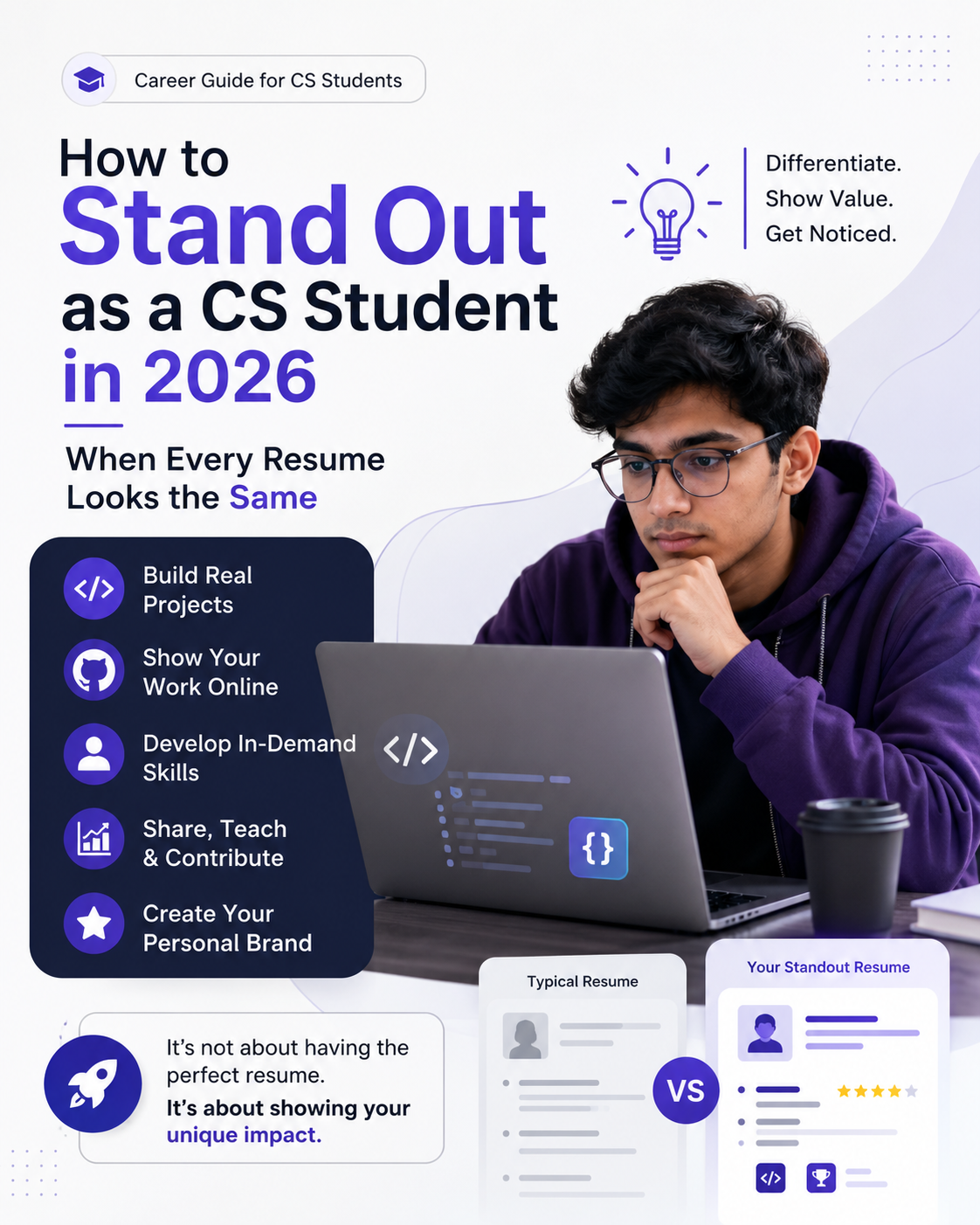
How to Stand Out as a CS Student in 2026 When Every Resume Looks the Same
How to Stand Out as a CS Student in 2026 When Every Resume Looks the Same
Same DSA practice. Same to-do app. Same e-commerce clone. Same three certifications. An interviewer has seen your resume before — literally.
Standing out isn't about doing more of what everyone else is doing. It's about doing one thing differently — going deep instead of broad, solving a real problem instead of following a tutorial, and being specific instead of generic. This guide breaks down exactly how, with 10 concrete differentiators and a framework for picking yours.
A note before you read
This guide is published by RequireHire's content team, part of Veridant AI. Nothing here requires switching to a trendy technology or building something impossibly ambitious. It's about depth, specificity, and genuine reasoning — things any CS student can start applying to their very next project, regardless of what year you're in.
Why Every CS Resume Genuinely Looks the Same in 2026
The explosion of online courses, tutorial videos, and structured learning paths has made it easier than ever to check every "expected" box — DSA practice, a portfolio site, a to-do app, a weather app clone, an e-commerce clone, the same handful of certifications. That's genuinely useful for learning fundamentals, but it also means thousands of resumes converge on an almost identical shape, since everyone learned from the same popular tutorials.
What this means for you specifically
An interviewer reviewing CS resumes doesn't need to see your fourth "clone" project to know you can follow instructions — they've seen the exact same one, sometimes down to the same UI, dozens of times. Standing out means giving them something they genuinely haven't seen before.
Do One Thing Differently, Not More of the Same
Standing out isn't about adding more certifications or more shallow projects — it's about going deep on one thing that's genuinely yours.
Solve a real problem instead of following a tutorial, go deep instead of broad, and be specific instead of generic about what you actually did. That's the entire shift — no trendy technology required.
The rest of this guide breaks that down into 10 concrete differentiators and a simple framework for picking yours.

What Actually Makes Resumes Blend Together
The same handful of project types
A to-do app, a weather app, an e-commerce clone, a portfolio site — genuinely useful for learning, but instantly recognisable and forgettable in a stack of resumes.
Generic skill claims
"Proficient in Java, Python, C++" tells an interviewer almost nothing they can act on, and appears on nearly every other resume in the pile.
The same three or four certifications
Popular, well-marketed certification programmes produce thousands of near-identical badges every year — useful as a foundation, not as a differentiator.
Vague team-project descriptions
"Worked on a team project" without any specific detail about what you personally did leaves an interviewer with nothing concrete to ask about.
10 Real Ways to Actually Stand Out
Build something that solves a problem you actually have. Not another to-do list or e-commerce clone — pick something genuinely annoying in your own life or college, and build a real tool for it. It stops looking like every other tutorial project the moment it solves a real, specific problem.
Go deep on one project instead of shallow on five. Five half-finished, tutorial-following projects say less about you than one project you genuinely iterated on, broke, fixed, and improved over weeks.
Contribute to a real open-source project, even a small fix. A single genuine pull request that got merged into an actively used repository says more than "familiar with open source" ever could.
Write briefly about what you built. A short technical post explaining a decision you made and why, even 300-400 words, demonstrates you can communicate technical thinking, not just execute it.
Pick a specific niche instead of claiming "full-stack" generically. "I build accessible web interfaces" or "I work on backend performance" is a more memorable, credible claim than a broad list of every framework you've touched once.
A Standout Resume Still Needs to Reach Someone
Once your resume reflects real depth instead of another generic project list, register it on RequireHire and let it build your candidate profile automatically — so employers who value exactly this can actually find you.
For job seekers. Takes minutes, not hours.
Register Your ResumeThe Differentiators That Build Lasting Proof
Show your GitHub history, not just your final commit. Genuine iteration, messy early attempts, and commit messages that show real problem-solving are more convincing than a project that appeared complete in a single commit.
Solve a problem for an actual person outside your own head. Building something for a friend, a small local business, or a college club, even something tiny, gives you a real user and real feedback.
Understand the "why," not just the "how." Being able to explain why you chose one database or architecture over another, including the tradeoffs, matters more in an interview than reciting what a tutorial told you to do.
Engage genuinely in a community, not just lurk. Answering a real question on a forum or in a developer community, or helping a peer debug something, builds a track record that's sometimes actually visible and checkable.
Keep your resume specific, not generic. "Improved query performance by restructuring an inefficient join" says more than "worked on database optimisation" — specificity is and instantly separates you from someone just listing buzzwords.
Breadth (Many Shallow Skills) vs Depth (One Real Specialisation)
Breadth
Listing every language and framework you've briefly touched looks impressive on paper, but each individual claim is shallow and hard to defend under a real follow-up question.
Depth
Going deep on one area means fewer bullet points, but each one genuinely holds up under scrutiny — which is exactly what an interviewer is testing for.
The honest verdict
Depth wins for standing out. Breadth without depth is exactly the pattern that makes CS resumes blend together in the first place.
Tutorial-Following Projects vs Self-Directed Projects
Tutorial-following
A genuinely fine learning exercise, but interviewers have seen the exact same project hundreds of times, sometimes down to the same UI and file structure.
Self-directed
A project solving a real, specific problem is inherently unique, because it comes from a real, specific situation only you had.
The honest verdict
Stop Blending In. Start Getting Found.
The same depth that separates your resume from a hundred identical ones also helps employers actually find you. Register once, and your profile is ready to apply with.
Register Now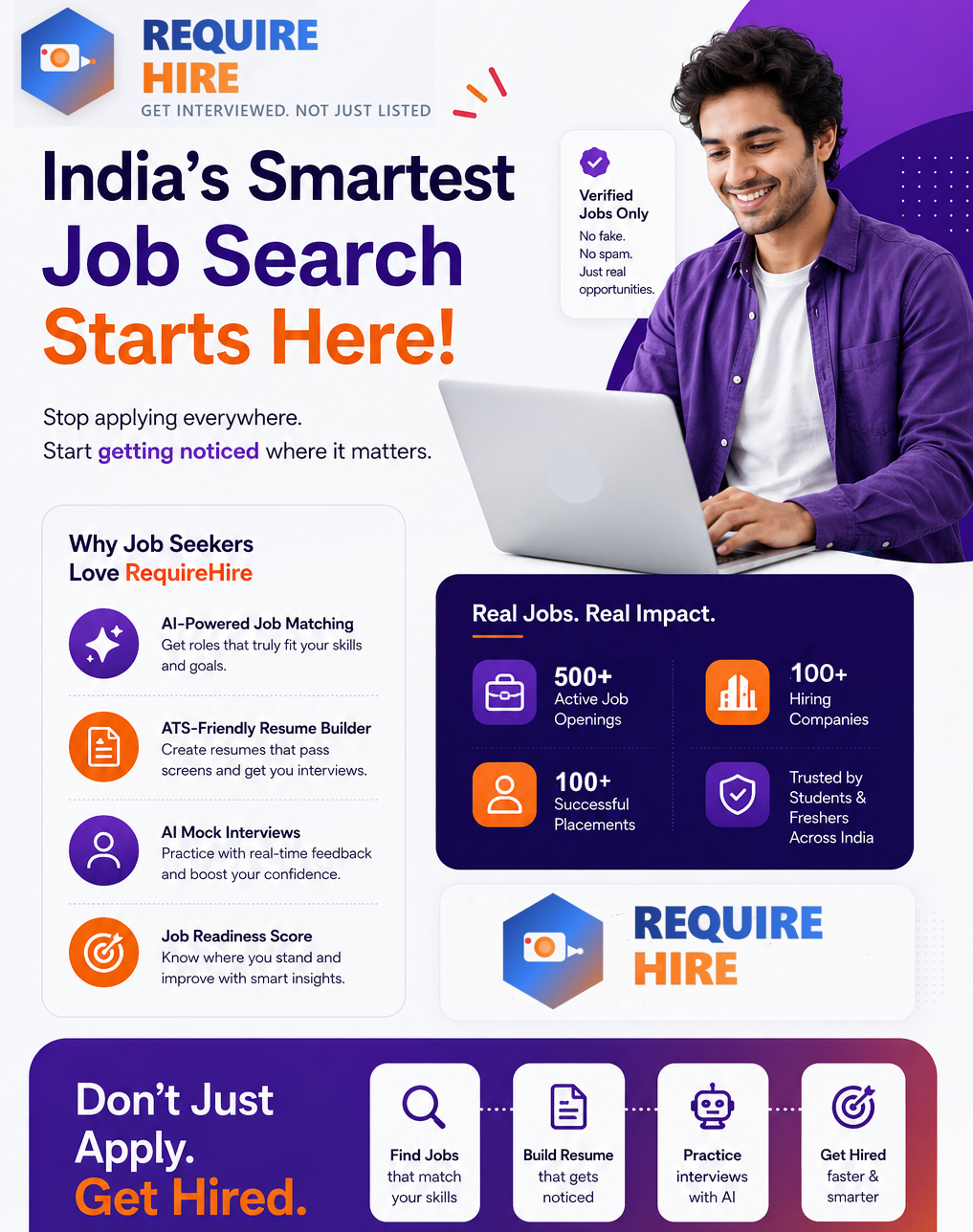
Generic Claims vs Provable Specifics
"Worked on database optimisation"
Technically true, completely forgettable, and identical to what a hundred other resumes say about the exact same kind of task.
"Restructured an inefficient join, cutting query time noticeably"
Specific enough to invite a follow-up question — and specific enough to prove you actually did it, not just watched someone else do it.
The honest verdict
Specificity costs nothing extra to write and does more differentiating work than almost anything else on this list.
Working Alone vs Building in Public
Solo, private
All the learning genuinely happens, but none of it is visible or verifiable to anyone evaluating you afterward.
Building in public
Sharing progress, writing about decisions, and engaging in communities creates a visible trail that backs up your resume claims with something real.
The honest verdict
Both approaches build genuine skill. Only one leaves evidence a recruiter or interviewer can actually go check.
A Simple Framework for Picking Your Differentiator
What genuinely annoys you — or someone you know — that software could realistically fix? That irritation is a real problem worth solving, not a made-up one.
What CS topic do you find yourself reading about even when it's not assigned? That genuine curiosity is a strong signal of where depth will actually feel sustainable, not forced.
What would you regret not having built by the time you graduate? Picking the intersection of these three questions usually points toward a direction genuinely worth going deep on.

What This Looks Like Across Different CS Interests
Web Development: instead of another portfolio template, build a tool that solves a real workflow problem for a specific group of users, and document the performance or accessibility tradeoffs you made.
ML / AI: instead of the same well-known beginner dataset tutorial, apply a model to something genuinely relevant to your college, city, or a personal hobby, and write about what didn't work first.
Mobile: build something for an actual small group of real users — a club, a hostel, a local shop — rather than a generic app-store-clone with no real audience.
Systems / Backend: pick a performance bottleneck in an existing open project and document exactly how you diagnosed and improved it.
Security: participate in a structured, legal practice challenge and document your actual approach to one problem in detail, not just the badge you earned.
Your Depth Deserves to Be Seen, Not Buried in a Pile
For job seekers. Register once, and your differentiated resume is ready to apply with.
Register Your ResumeCommon Mistakes CS Students Make Trying to Stand Out
Adding more certifications instead of more depth
A resume with eight certification badges and no real depth often reads as checkbox-completion rather than genuine capability.
Cloning a well-known app pixel-for-pixel
Calling it a "project" without adding anything genuinely your own means it looks identical to hundreds of others an interviewer has already seen.
Claiming skills you can't defend
A basic follow-up question exposing a skill that was really just a one-time tutorial exercise damages credibility for the rest of the interview.
Chasing trending buzzwords over fundamentals
A shallow project in whatever's trending this year is far less convincing than a well-understood project in a mainstream technology.

The "More Certifications = Better Resume" Myth
It's an understandable instinct — certifications feel like concrete, checkable proof of effort, so adding more feels like it should always help. In practice, a resume with a long certification list and nothing else distinctive often blurs into exactly the same pattern as everyone else's.
What actually differentiates
One completed, well-explained project usually beats a long certification list, because it's provable, not just claimed. Certifications show exposure; a real project shows capability — and capability is what interviewers are actually trying to assess.
Why This Actually Matters to Interviewers
What interviewers actually notice
Interviewers see the same tutorial project descriptions dozens of times a week. A specific, well-reasoned answer to "walk me through a project" is memorable precisely because it's rare — most candidates default to reciting a generic project description, so genuine specificity and clear reasoning stand out disproportionately more than the raw technical difficulty of what you built.

How to Document Your Differentiator for Your Resume & Portfolio
Write a short case study: what problem, what you tried, what you learned, and what you'd do differently now.
Keep your GitHub commit history visible and readable: genuine iteration is part of the proof, not something to hide.
Prepare to explain one tradeoff decision in detail: the exact kind of follow-up question interviewers most often ask, and most candidates are least ready for.
Your Roadmap, by Year
1st / 2nd Year
Build fundamentals through tutorials and coursework, but start genuinely noticing what interests you beyond the syllabus.
3rd Year
Use the framework to pick your one differentiator, and start going genuinely deep on it rather than adding more shallow breadth.
Final Year / Job Search
Document your differentiator properly, and make sure your resume reflects that specific depth, not generic breadth.
Your Standout Score
Check everything that's true for you right now, then calculate your score.

This Guide, in Numbers
Depth Is Rare. Make Sure It's Findable.
Once your resume reflects real specificity, get it in front of employers who'll actually notice.
Register Your ResumeTurning This Into a Plan: Before, During, After
Do: Answer the three framework questions honestly
A direction you're genuinely curious about sustains the depth needed to actually stand out.
Don't: Pick a project purely because it sounds impressive
A project you can't sustain interest in rarely gets the depth that actually differentiates it.
Do: Keep your commit history messy and real
Iteration is proof, not something to clean up and hide before anyone sees it.
Don't: Wait until it's "finished" to write about it
Document decisions as you make them — reconstructing your reasoning later loses exactly the specifics that make it convincing.
Do: Rewrite your resume line around the specific outcome
Replace generic duty statements with the specific, provable result of your differentiator project.
Don't: Let it sit unlisted or undocumented
A great project that isn't visible or explained anywhere does no differentiating work at all.

Your Final Checklist
You've picked one differentiator using the three-question framework.
You can explain a specific tradeoff decision in real depth.
Your GitHub or portfolio shows genuine iteration, not just a polished final state.
Your resume replaces at least one generic claim with a specific, provable outcome.
You've written even a short explanation of what you built and why.
10 Questions CS Students Actually Ask About This
The CS Student Who Registers Today Gets Seen Before the One Still Polishing Their Fifth Clone Project
You now know exactly what actually differentiates a CS resume in 2026 — not more certifications, but genuine depth. The next step is making sure the right employers can find that depth. Register your resume and let it start working for you.
100% for job seekers. RequireHire is a product of Veridant AI.
Ready to Practice What You Learned?
Take a free AI mock interview and get your skill score in 15 minutes. 100% free for all candidates.
Related Posts
Practice Your Interview
Get ready for your next interview with our AI-powered mock interview tool.
Start Practice Interview